Who monitors a robotaxi, and who drives it? The clinic’s second working session
The control centre, oversight operator and remote driver were the focus of the Automated Transport Regulation Clinic’s second working session, held on 28 October 2026 at the Faculty of Law of Comenius University Bratislava. Students connected legal requirements with practical questions about organising a fictional robotaxi service.
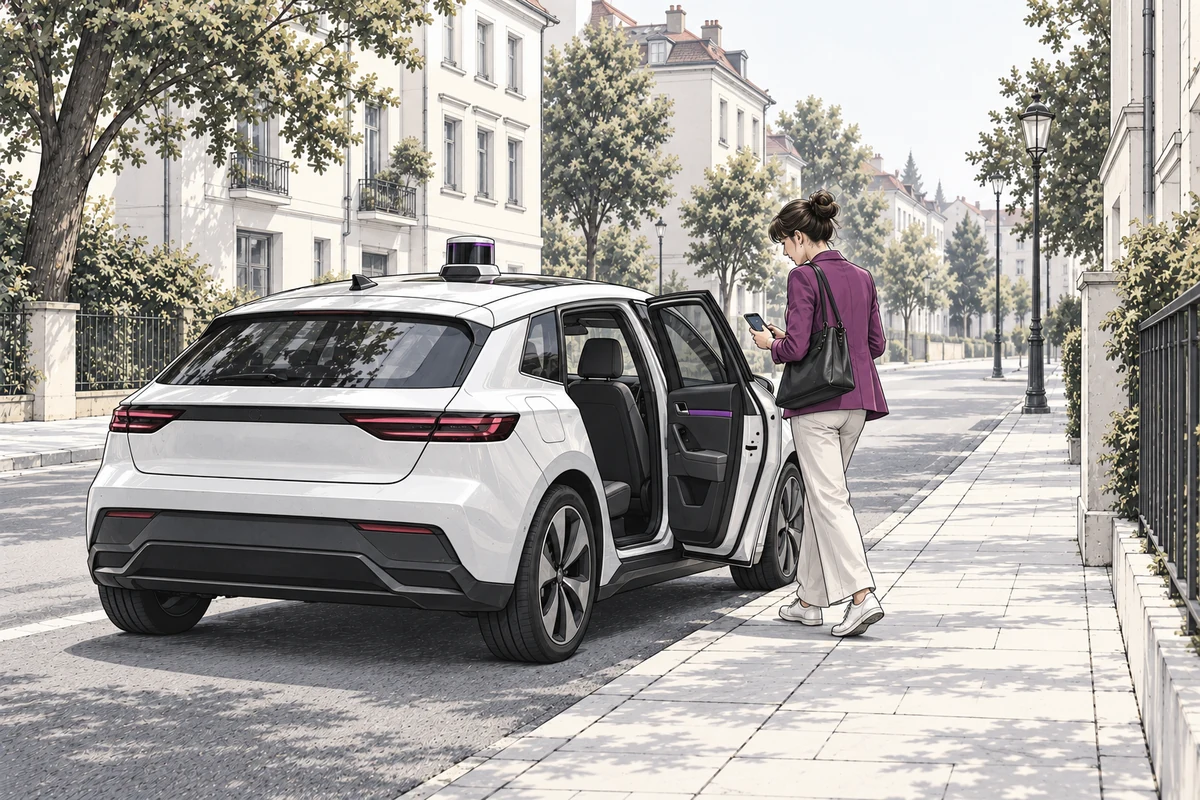
The illustration was created using ChatGPT (OpenAI), based on the author’s instructions and feedback.
Following the analysis of testing, trial operation and commercial transport, work continued on the shared case of a fictional client seeking to enter the Slovak market. The client plans to use three vehicles with no driver on board. One member of staff is expected to monitor their operation, communicate with passengers and intervene when needed.
Students highlighted a specific detail in the amended Section 49a(7) of Act No. 106/2018 Coll.: the oversight operator’s employment relationship is with the holder of the vehicle operator’s licence. This raised the question of how to meet that requirement if the client uses a control centre provided by another entity. Related questions concerned whether the client would establish its own centre in Slovakia or use the supplier’s facility abroad, and when the centre would need to be ready in relation to the licence application.
Another part of the discussion focused on what the member of staff actually does through the software. Does the system allow direct remote driving, or does the person only confirm a proposal made by the system? Who assesses whether it is safe to pass an obstacle, and who responds to a change in traffic conditions? These questions help distinguish oversight, remote intervention and driving the vehicle.
The requirement for continuous technical oversight raised questions about cover arrangements and working schedules. Who takes over monitoring the other two vehicles when the member of staff begins directly driving one? What happens if all three vehicles require intervention at once, or if the replacement operator is also unavailable? Questions also addressed the communication channel and the ADS response to a lost connection or a significant communication delay.
Students also asked about training content, on-site response assistance and communication with the police following an accident or a vehicle becoming blocked. They returned to evidence of the system’s capabilities: what test reports does the client have for passing obstacles and stopping to allow passengers to board in Slovak conditions?
The work drew on Slovak legislation as amended by Act No. 248/2026 Coll., whose provisions are assumed to be in force for teaching purposes. Draft implementing decree LP/2026/500 was used as a non-binding basis for comparison. Regulation (EU) 2022/1426 was also used to distinguish human and system roles within its ADS type-approval context.
The questions for the client identified information still needed to develop reasoned advice on staffing and operational arrangements. The next session will address records, data and incident reporting. The findings from each topic will gradually be brought together in a single joint legal report.
From testing to a commercial robotaxi service: the clinic’s first working session
What does a new operator need to provide a paid robotaxi service in Slovakia? This question was the focus of a working session of the Automated Transport Regulation Clinic, held on 14 October 2026 at the Faculty of Law of Comenius University Bratislava.
The illustration was created using ChatGPT (OpenAI), based on the author’s instructions and feedback.
Following the introductory meeting, attention turned to the legal analysis of the shared model case. A fictional client intends to lease vehicles from a foreign manufacturer and offer individual journeys booked through an app, with no driver inside the vehicle. Before launching the service, however, the client needs to establish which documents and authorisations must be obtained.
The seminar focused on distinguishing testing, trial operation and commercial passenger transport. The assignment raised questions about who may apply for the relevant permit, the manufacturer’s role and what the prospective operator must arrange. Particular attention was given to the distinction between a technical test result, approval of a vehicle or system, and authorisation to provide paid transport.
The case also illustrated the importance of specific circumstances. The client has results from tests of an earlier version of the automated driving system but plans to use a modified version in urban traffic. What can be inferred from the original tests? Which changes need to be explained, and what further evidence should be requested?
The connection between the case and regulation also centred on Regulation (EU) 2022/1426 and the requirement for the ADS to comply with the traffic rules of the country of operation. Passing an obstacle under Slovak traffic rules provided a concrete example. A test conducted in a closed area without oncoming vehicles raises the question of what it actually demonstrates about the system’s behaviour in ordinary traffic.
The Slovak exercises used the legislation as amended by Act No. 248/2026 Coll., whose provisions are assumed to be in force for teaching purposes.
The aim was to formulate preliminary advice for the client and identify which missing information could change the next legal steps. The analysis will continue with questions concerning the control centre, oversight operator and remote driver. The individual topics will gradually be brought together in a joint final report.
The first clinic meeting: a robotaxi service in Slovakia
At the first meeting of the Automated Transport Regulation Clinic on 30 September 2026, students were introduced to a shared model case. They divided the work among three thematic groups, which will develop a single joint legal report for a fictional client.
The illustration was created using ChatGPT (OpenAI), based on the author’s instructions and feedback.
A fictional company intends to launch a paid robotaxi service in Slovakia using three vehicles leased from a foreign supplier. Passengers would book journeys through an app, with no driver in the vehicles. However, complete approval documents, clearly defined control-centre roles and agreed arrangements for access to records are missing.
The first group focuses on testing, trial operation and commercial operation. The second examines the control centre and human roles. The third addresses records, data and procedures for handling events. The case is used for teaching, and students will assess its legal and technical feasibility.
At the next meeting, the first group will lead the discussion. It will present the main questions, relevant provisions and a preliminary route to a commercial service. The other groups will contribute questions concerning the control centre and the data needed.
GE.3's mandate ended in June 2025. Its work is now being developed within WP.1 by IWG-SUAT, which maps the legal gaps between technical ADS approval and safe, lawful use in traffic.
What does it take to put an automated vehicle on the road — from a legal perspective? In the 2026/2027 academic year, I will be teaching a new elective course, the Automated Transport Regulation Clinic, at the Faculty of Law of Comenius University Bratislava.
The illustration was created using ChatGPT (OpenAI), based on the author’s instructions and feedback.
Together with my students, I will explore a practical case involving the testing and operation of automated vehicles. Working as a small team, we will examine which rules apply, who is responsible for what, and which issues need to be resolved before operations can begin.
I want students to experience turning legal analysis into practical recommendations. Their work will culminate in a single joint legal report for a fictional client. Details of the assignment and updates from the meetings are available on the course page.